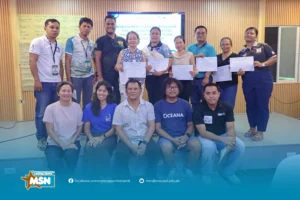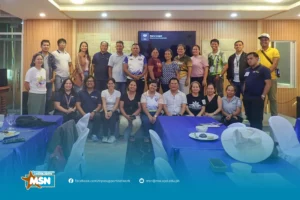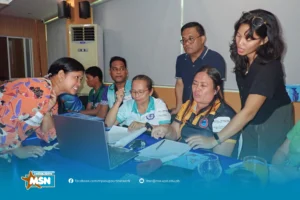
Surigao del Norte—Beyond technical discussions on marine protection and enforcement systems, the MPA Management Effectiveness Assessment Tool (MEAT) Workshop for the Hinatuan Passage Development Alliance (HIPADA) also became an avenue for participants to raise long-standing realities faced by coastal communities.
During the open forum, Mr. Mahalie B. Robantes—marine sanctuary management board chairman in Taganaan, Fisheries Management Area (FMA) 8 representative, and former fisherfolk regional director—shared that after 24 years of experience in Marine Protected Area (MPA) management, many of the challenges, especially illegal fishing activities, remain persistent.
Poverty—according to Robantes, is the root cause of these.
“Kinsa may ganahan gukod-gukuron sa polisya? Kinsa man ganahan magbuhat og illegal? (Who wants to keep running from authorities? Who wants to commit illegal activities?),” he expressed, explaining that many fisherfolk resort to illegal practices out of survival and limited livelihood opportunities.
He emphasized that despite free tuition programs, many families still struggle with daily expenses, making stable employment difficult to access for marginalized sectors in an economy that requires at least college level for entry-level jobs.
Robantes stressed the importance of Information, Education, and Communication (IEC) campaigns, which he described as effective in helping communities better understand marine protection laws and conservation efforts. However, he noted that awareness programs are often the least prioritized due to limited funding and competing local concerns.
He elaborated concerns on institutional support for coastal communities, pointing out that the fisheries sector often lacks the same level of empowerment given to other sectors despite the high costs and challenges associated with marine resource management.
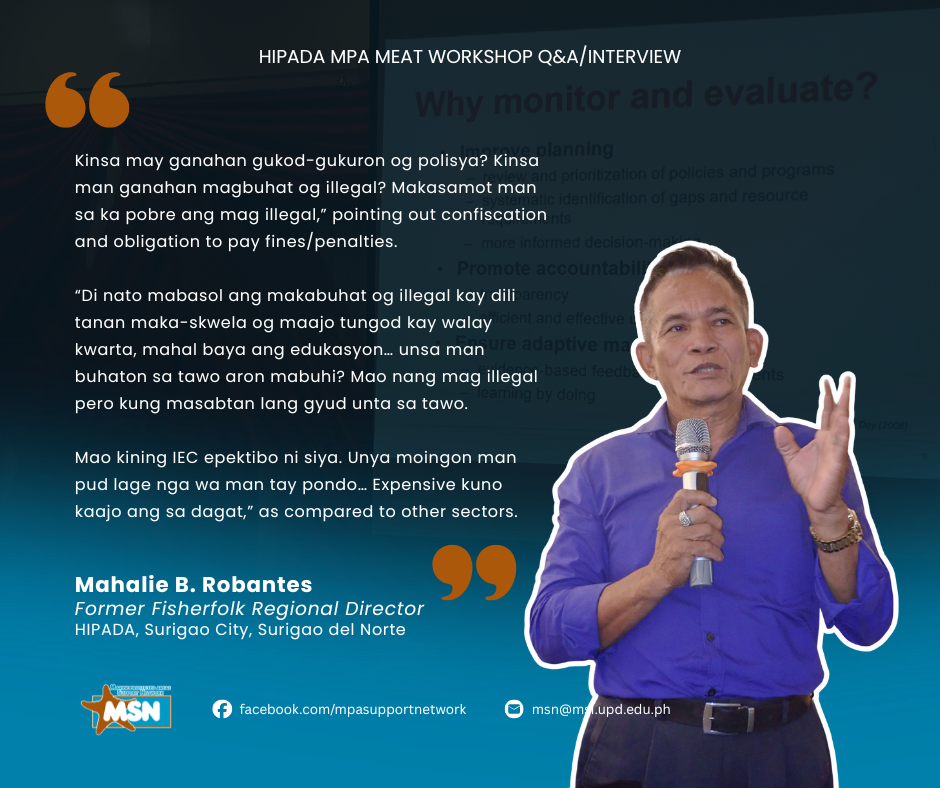
“Expensive kuno kaajo ang sa dagat kumpara sa [ubang sektor] pareho sa agriculture (Coastal management is said to be more expensive compared to other sectors like agriculture).”
While acknowledging the complexity and expense of protecting marine ecosystems, Robantes emphasized that coastal and marine sectors—especially marginalized fisherfolk—deserve equal representation, support, and opportunities for sustainable livelihood.
Concluding his statement, Robantes briefly expressed the importance of having a separate national agency for the fisheries and aquatic resources that can independently support and allocate funds for the marine management sector.
By Genea Rupert Claire (GRC)
Check out our FB post through this link: https://www.facebook.com/share/p/17U2cxcz7R/